

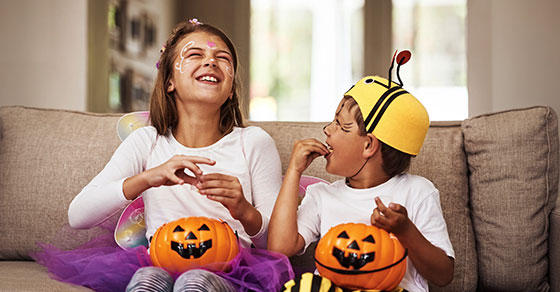
Halloween candy doesn’t have to be completely off-limits to protect your teeth. What matters is understanding how different treats expose your teeth to sugar and acids, then making a few sensible choices about what you eat and how often you eat it.
Tooth decay develops over time, so one piece of candy isn’t the whole story. The amount of sugar matters, but so do stickiness, acidity, how long a treat stays in your mouth, and how frequently your teeth are exposed. At Casa Dental, we encourage patients and families to enjoy special occasions while keeping everyday oral-care habits in place.
Here’s how five common Halloween treat categories compare.
The Best and Worst Halloween Treats for Tooth Decay
Some treats clear away from the teeth more easily than others. Sticky candy can stay attached to tooth surfaces, while hard candy may expose teeth to sugar for longer as it dissolves. Sour treats can add another factor through their acidity.
“Better” doesn’t mean unlimited, though. How frequently you snack and how well you care for your teeth still influence tooth decay risk.
1. Sugar-Free Gum — One of the Better Choices
Sugar-free gum can be a more tooth-conscious option when you want something sweet without choosing sugar-containing candy. Chewing gum increases saliva flow, which helps dilute and neutralize acids produced by plaque bacteria.
Sugar-free gum can support cavity prevention as part of a regular oral-care routine, but it isn’t a substitute for brushing, cleaning between your teeth, or regular dental visits. Check the label as well, since not every type of chewing gum is sugar-free.
2. Chocolate — A Better Traditional Candy Option
If you’re choosing traditional Halloween candy, chocolate is generally easier for teeth to clear than sticky or gummy sweets. It tends not to remain attached to tooth surfaces for as long, which can reduce the duration of sugar exposure compared with some other candies.
Chocolate still contains sugar. Portion size and frequency matter, so it shouldn’t be treated as harmless simply because it may be a better choice than a sticky candy.
3. Hard Candy — Longer Sugar Exposure
Hard candies can stay in your mouth for several minutes while they dissolve. That longer contact can extend the time your teeth are exposed to sugar.
Frequency matters too. Slowly eating hard candies one after another can create repeated sugar exposure instead of one short treat period. There’s also another concern: biting down on hard candy can put unnecessary force on teeth. Being non-sticky doesn’t automatically make a candy tooth-friendly.
4. Sticky and Chewy Candy — Difficult to Clear From Teeth
Gummies, caramels, and similar chewy sweets can cling to grooves and tooth surfaces after you’ve finished eating. That texture can keep sugar in contact with the teeth longer than foods that wash away more readily.
When you’re sorting Halloween treats, look beyond the sugar content printed on the package. Texture matters as well. Sticky candy doesn’t guarantee that someone will develop cavities, but prolonged contact with sugary food is one factor worth limiting.
5. Sour Candy — Sugar Plus Acidity
Sour candies often combine sugar with dietary acids, which creates two separate dental considerations.
Sugar can contribute to tooth decay when oral bacteria use it and produce acids. Dietary acids in sour candy can also act directly on enamel and contribute to dental erosion. These processes aren’t the same, even though both can affect teeth.
That doesn’t mean one sour candy causes permanent damage. Moderation and limiting repeated exposure are more useful than treating an occasional Halloween sweet as an emergency.
How to Enjoy Halloween Candy Without Constant Sugar Exposure
The relationship between sugar and teeth isn’t only about how much candy you eat. How often you expose your teeth to sugary foods matters because repeated snacking gives plaque bacteria more opportunities to produce acids.
Try enjoying Halloween treats with or shortly after a meal instead of grazing on them throughout the day. Saliva production increases while eating and helps clear food particles and acids from the mouth.
Water is another simple choice after sweets. It can help rinse away loose food debris and acids.
Most importantly, keep your usual oral-hygiene routine going. Children and adults should continue brushing and cleaning between their teeth rather than treating Halloween night as an exception.
When a Halloween Sweet Tooth Becomes a Dental Concern
Cavities can begin without causing obvious symptoms, which means feeling fine doesn’t necessarily tell you whether tooth decay is present.
As decay progresses, some people may notice sensitivity or toothache. Those symptoms can have different causes, so they’re better assessed by a dentist than diagnosed at home.
If you have persistent discomfort, concerns about cavities, or questions about your own risk, a dental examination can provide information specific to your teeth and oral health. Our team at Casa Dental can discuss your concerns and explain the care options that may be appropriate for your situation.
Reduce Tooth Decay Without Giving Up Halloween Fun
Enjoying Halloween and being mindful of tooth decay can go together. Choosing treats that don’t linger on teeth as long, avoiding constant snacking, drinking water, and maintaining your regular oral-hygiene routine can all make Halloween candy easier to manage.
If you have concerns about your teeth or want to learn more about preventive, restorative, or other available care, explore Casa Dental’s dental services.
Reach out to Casa Dental today at 905-272-1634 (Mississauga) or 416-923-3312 (Toronto), email us at king@casadental.ca or dupont@casadental.ca or click here to get in touch online.
Frequently Asked Questions About Halloween Candy and Tooth Decay
Does eating sugar automatically cause cavities?
No. Tooth decay is a process involving oral bacteria, sugars or starches, acid production, and repeated mineral loss from tooth enamel. How often your teeth are exposed to sugar, along with your oral-care habits and individual risk factors, also matters.
Is chocolate better for your teeth than gummy candy?
Chocolate generally clears from teeth more readily than sticky or gummy sweets, making it a comparatively better Halloween choice. It can still contain plenty of sugar, though, so portion size and eating frequency remain relevant.
Why are sour candies hard on teeth?
Many sour candies contain dietary acids in addition to sugar. Sugar can contribute to bacterial acid production involved in tooth decay, while the acids in sour candy can directly contribute to enamel erosion.
Is it better to eat Halloween candy all at once or throughout the day?
Keeping sweets to a defined time, such as with or shortly after a meal, can reduce repeated sugar exposure compared with grazing throughout the day. Meals also increase saliva flow, which helps clear food and acids.
Can sugar-free gum help after eating Halloween candy?
Chewing sugar-free gum increases saliva flow, which can help dilute and neutralize plaque acids. It can complement your normal oral-care routine, but it doesn’t replace brushing, cleaning between teeth, or professional dental care.




 REQUEST AN APPOINTMENT